Milkweed glossary
The words this guide uses, defined plainly. Where a photograph explains a term better than a sentence can, there is one.
- Asclepias
- The genus of true milkweeds, named after Asclepius, the Greek god of medicine. Roughly 73 species are native to North America. All 72 species →
- Alternate
- A leaf arrangement with one leaf per node, staggered up the stem. Unusual in milkweeds; butterfly weed and antelope horns are the best-known examples. How to read leaf arrangement →
- Axillary
- Borne in the angle between a leaf and the stem. Several milkweeds carry their flower clusters in the leaf axils rather than at the stem tip.
- Cardenolide
- A cardiac glycoside, the class of compound that makes milkweed toxic by interfering with the sodium-potassium pump in animal cells. Monarchs are resistant and store it for their own defense. What the toxins do →
- Cordate
- Heart-shaped, with a notched base. Heartleaf milkweed is the classic western example. Heartleaf milkweed →
- Corpusculum
- The small dark clip that joins two pollinia and attaches the whole assembly to an insect leg. How milkweed pollination works →
- Corolla
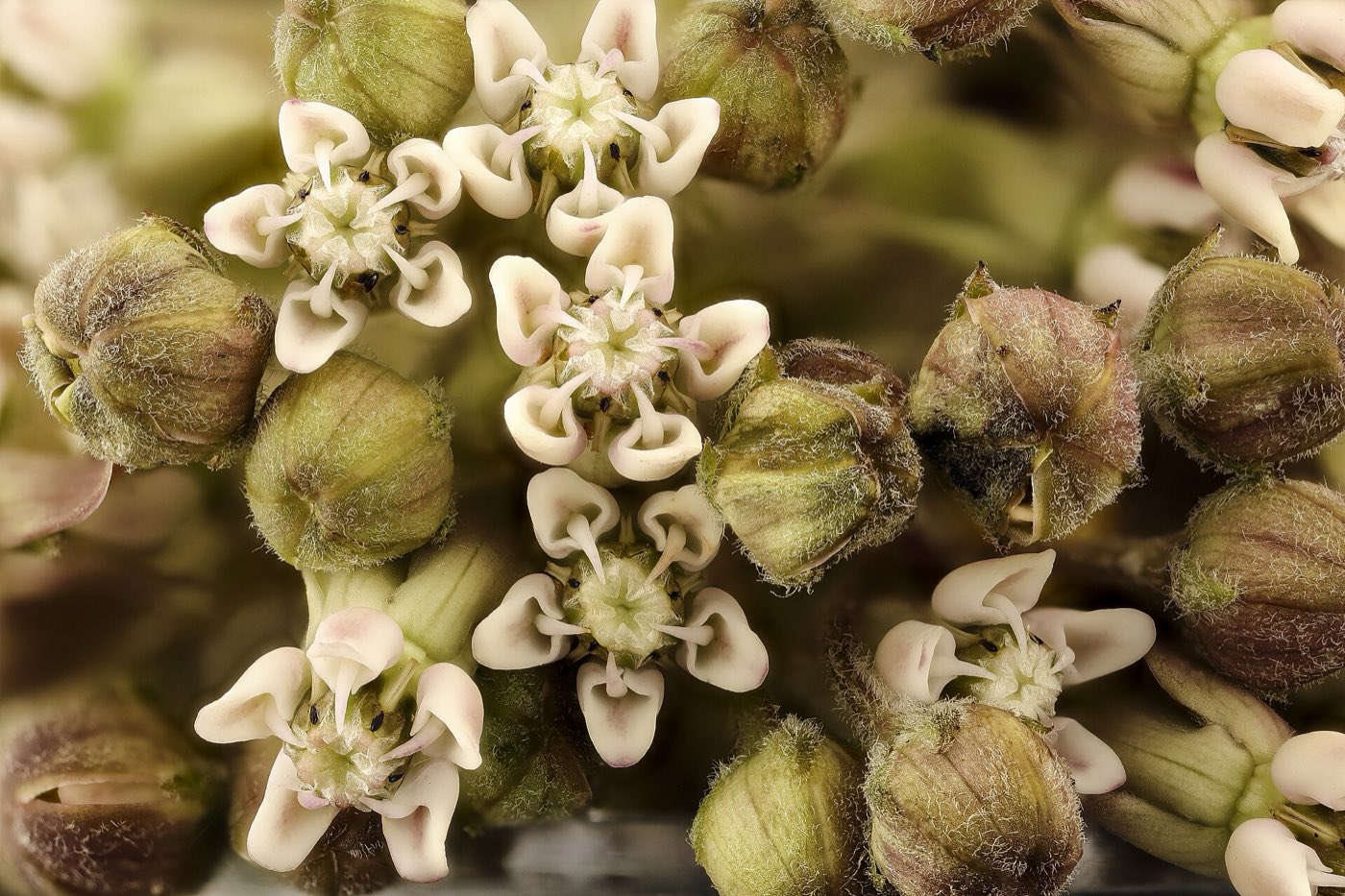
- The ring of five petals. In milkweeds they are reflexed, bent sharply backward away from the flower center. Reading a milkweed flower →
- Cultivar
- A named selection propagated for particular traits, such as the white swamp milkweed sold as Ice Ballet. Cultivars of native species are sometimes called nativars. Milkweed cultivars →
- Diapause
- A state of suspended reproduction. Fall monarchs enter reproductive diapause before migrating, and evergreen tropical milkweed can prevent them from doing so. The migratory generation →
- Ecoregion
- A region defined by shared climate, geology and vegetation. Buying seed from your own ecoregion gives plants adapted to your conditions. What grows where you live →
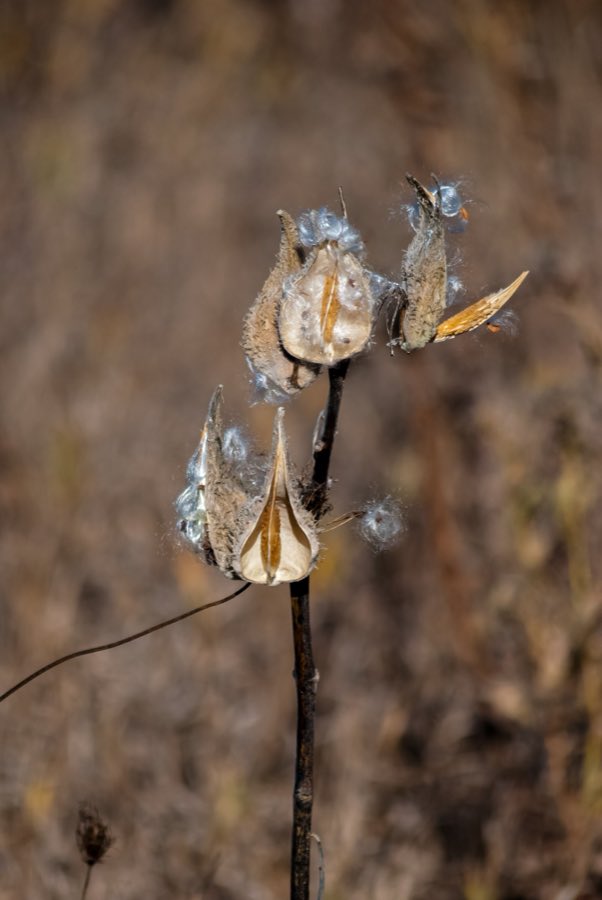
- Follicle
- A dry fruit that splits along a single seam. The botanical term for a milkweed pod. Collecting seed →
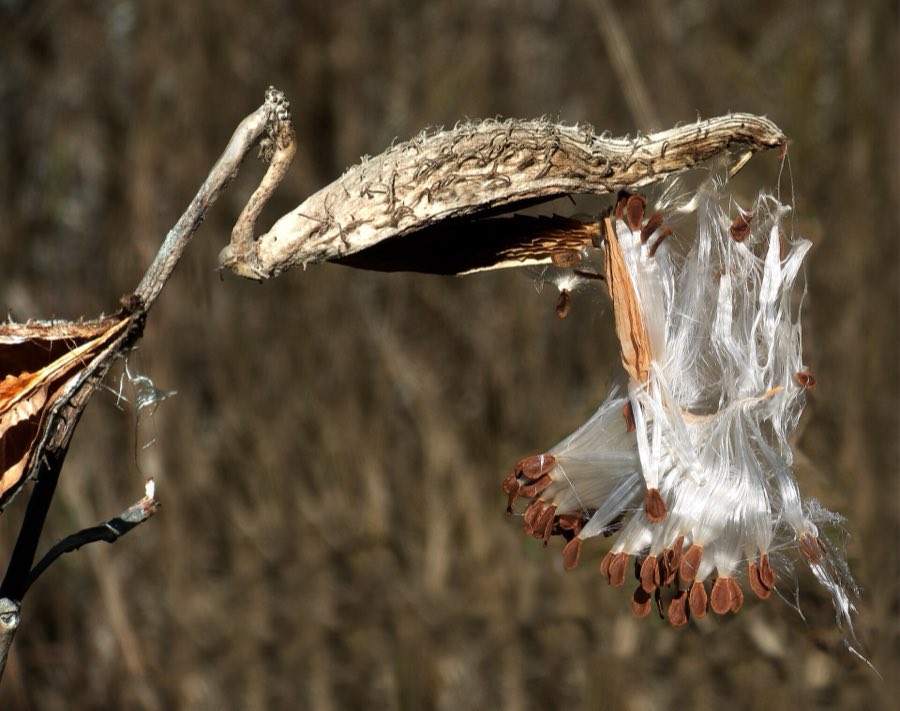
- Floss
- The silky parachute attached to each milkweed seed, technically the coma. Aquatic milkweed is the only North American species whose seeds lack it. Separating seed from floss →
- Glaucous
- Covered with a fine blue-gray waxy bloom, as on the leaves of clasping and heartleaf milkweed. Clasping milkweed →
- Hood
- One of the five cup-like structures forming the crown of a milkweed flower. Hood shape is a key identification character. Reading a milkweed flower →
- Horn
- A curved projection arising inside a hood and arching over the flower center. Present in most but not all species. Reading a milkweed flower →
- Host plant
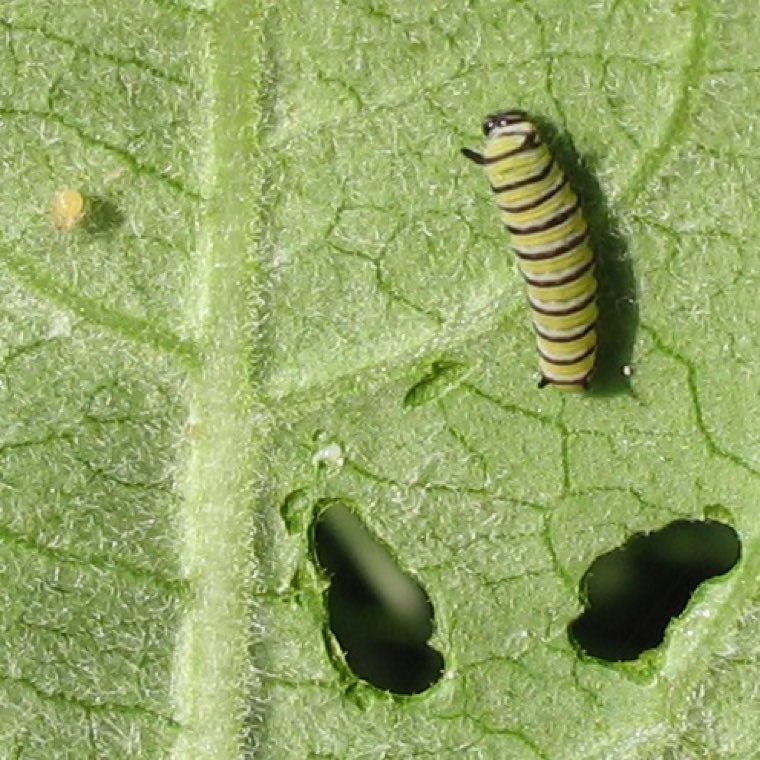
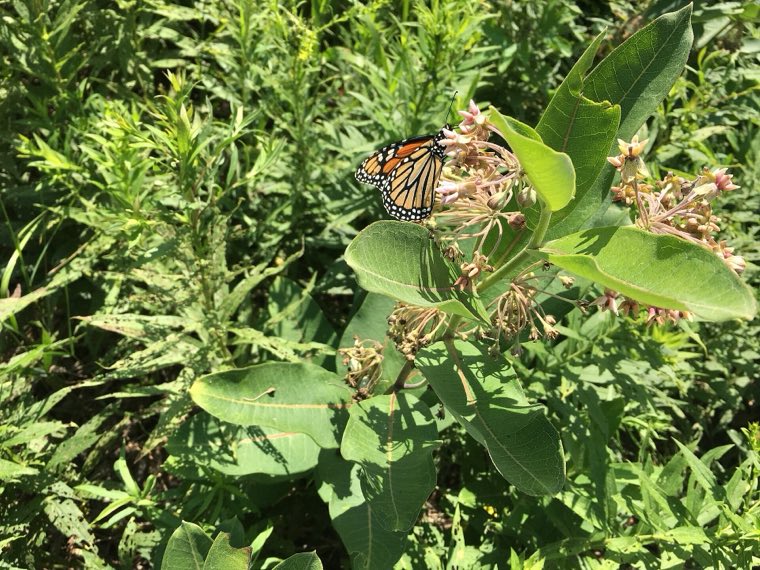
- The plant a butterfly or moth lays eggs on and its larvae eat. Milkweed is the monarch’s only host plant genus. Why milkweed and nothing else →
- Lanceolate
- Lance-shaped: several times longer than wide, widest below the middle and tapering to a point. Swamp milkweed →
- Latex
- The white, sticky sap that gives milkweed its name. It defends the plant by gluing the mouthparts of small herbivores. Handling milkweed safely →
- Nativar
- A cultivated selection of a native species. Some perform as well as the straight species for wildlife; others do not, and the evidence varies by plant. Are nativars good for monarchs? →
- Neonicotinoid
- A class of systemic insecticide that moves throughout a plant’s tissues and persists for months. Neonicotinoid-treated milkweed kills the caterpillars it was bought to feed. Buying untreated plants →
- Node
- The point on a stem where leaves attach. Counting leaves per node tells you whether the arrangement is alternate, opposite or whorled.
- OE
- Ophryocystis elektroscirrha, a protozoan parasite of monarchs. Spores on milkweed leaves are eaten by caterpillars; infected adults emerge weakened and often deformed. How OE builds up →
- Obovate
- Egg-shaped but widest above the middle, like a paddle. Pineland milkweed is an example.
- Opposite
- A leaf arrangement with two leaves per node, directly facing each other. The commonest arrangement in the genus. How to read leaf arrangement →
- Pedicel
- The stalk of an individual flower within a cluster.
- Peduncle
- The stalk supporting a whole flower cluster. Clasping milkweed carries its single umbel on a conspicuously long peduncle.
- Phyllotaxy
- The technical term for leaf arrangement on a stem. Identifying by leaf arrangement →
- Pollinarium
- The complete pollen-transfer unit of a milkweed: two pollinia, two connecting arms and a corpusculum. How milkweed pollination works →
- Pollinium
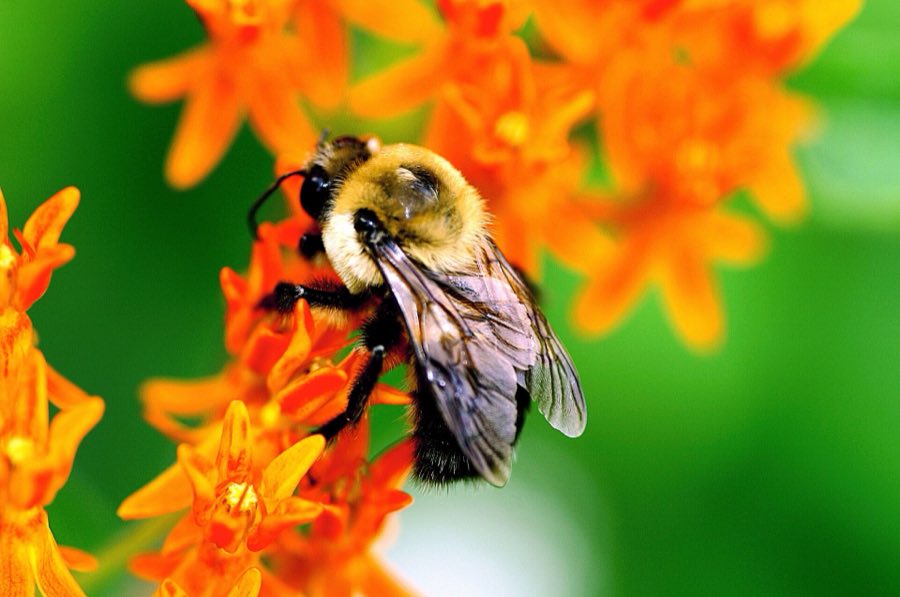
- A waxy sac containing all the pollen from one anther, transferred whole rather than as loose grains. Only orchids and milkweeds do this. How milkweed pollination works →
- Rhizome
- An underground stem that spreads horizontally and sends up new shoots. Common milkweed’s rhizomes are why it colonizes so aggressively. A rhizomatous milkweed →
- Scarification
- Physically nicking or abrading a seed coat to speed water uptake. Rarely necessary for milkweed. Sowing milkweed seed →
- Stratification
- A period of cold, moist conditions that breaks seed dormancy. Most milkweeds need about 30 days at 4°C before they will germinate reliably. How to stratify seed →
- Stigmatic chamber
- The slot in a milkweed flower into which a pollinium must be inserted for pollination to succeed. How milkweed pollination works →
- Taproot
- A single deep primary root. Taprooted milkweeds such as butterfly weed are drought-proof but almost impossible to transplant once established. A taprooted milkweed →
- Umbel
- A flower cluster in which every stalk radiates from a single point, like the ribs of an umbrella. All milkweeds have umbels. Reading a milkweed flower →
- Whorled
- A leaf arrangement with three or more leaves ringing the stem at one node. Whorled milkweed →
- Xeric
- Adapted to dry conditions and low rainfall. Most western and desert milkweeds are xeric and rot in irrigated ground. Desert milkweeds →