Roughly easiest first. The last one takes years and is the most useful.
Find a milkweed and prove it
Time: An afternoon · You need: Eyes. A notebook if you like.
Milkweeds give themselves away three ways, and you can check all three without picking anything.
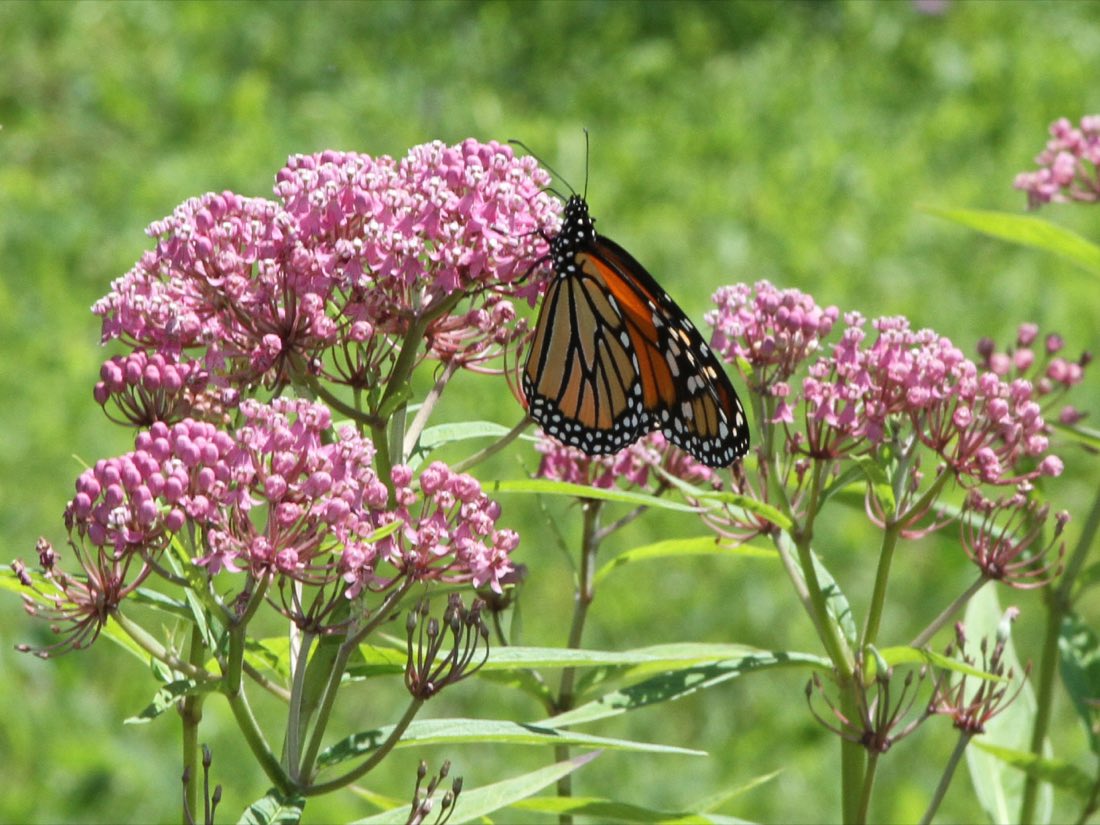
- Find the flowers. Every stalk in the cluster comes out of one single point, like the ribs of an umbrella. Each flower has five petals bent backward and five little cups standing up above them.
- Look at how the leaves sit. Most milkweeds have them in facing pairs. Some have them one at a time, and a few have three or more in a ring around the stem.
- Check the sap, carefully. Snap off the very tip of one leaf and watch the break. Nearly every milkweed bleeds thick white sap within seconds. Wash your hands afterwards and keep it away from your eyes.
Then what? Once you are sure it is a milkweed, work out which one using the key on this site.
Try the identification key →
Watch one flower head for ten minutes
Time: Ten minutes · You need: A watch, and somewhere to sit.
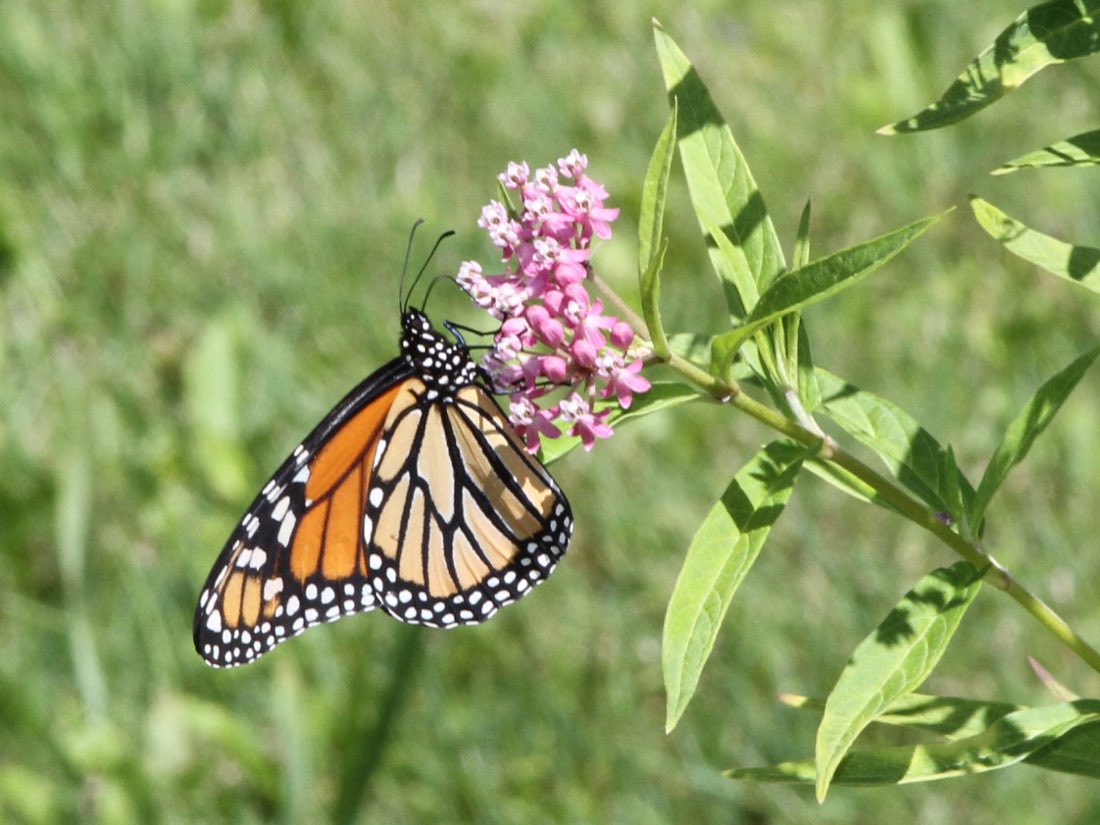
This sounds boring and is not. A milkweed in flower is one of the busiest places in the whole meadow, and ten minutes is long enough for the traffic to sort itself out.
- Pick one cluster of flowers and sit close enough to see it properly.
- Every time something lands, make a mark. Bees in one column, wasps in another, flies, butterflies, beetles, anything else.
- Watch the legs of the big ones. If you are lucky you will see a bee fly off with the milkweed’s pollen bags clipped to its foot, like tiny saddlebags.
- Look underneath the leaves and inside the flower head too. Crab spiders sit in flowers with their front legs open, waiting.
Then what? Do it again at a different time of day. Milkweed smells strongest in the evening, and a different crowd turns up.
Meet everything that lives on milkweed →
Trick a seed into thinking winter has happened
Time: A month of waiting, then twenty minutes · You need: Milkweed seed, a damp paper towel, a plastic bag, a fridge, pots and compost.
Most milkweed seed will not grow until it has been cold and damp for about a month. That is the plant making sure it does not sprout in October and freeze. You can fake the winter in a fridge.
- Dampen a paper towel, wring it out so it is not dripping, and fold the seeds inside it.
- Put the towel in a plastic bag, label it with the date, and leave it at the back of the fridge for thirty days.
- Sow the seed in damp compost about as deep as the seed is wide. That is barely covered. Milkweed seed needs to feel light.
- Keep it warm and damp. Most species come up in one to two weeks.
- Try a fair test: keep back half the seed, do not chill it, and sow both lots on the same day. Count how many come up in each.
Then what? Plant them out where they will get plenty of sun, and leave them alone. Milkweed spends its first year building roots and can look disappointing above ground.
The full instructions →
Tell a monarch from the ones pretending to be one
Time: Twenty minutes · You need: A photograph, or a butterfly holding still.
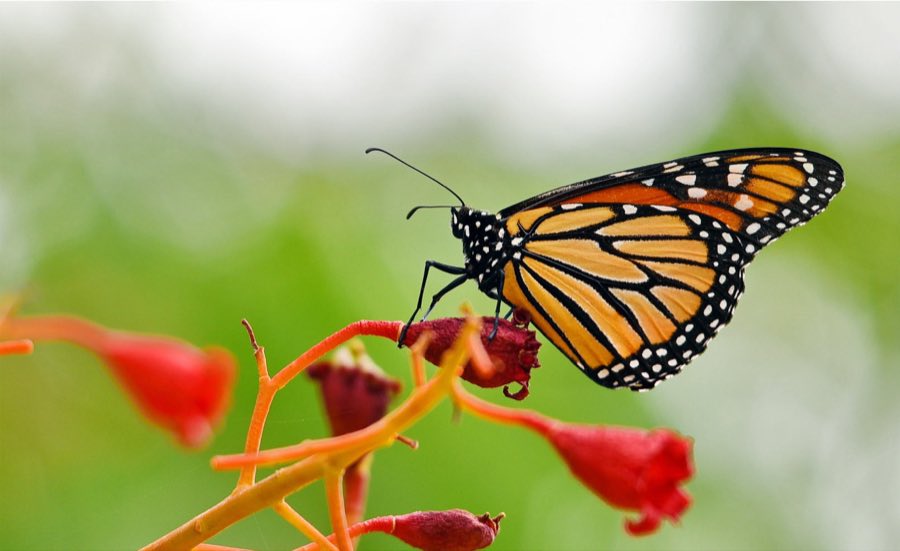
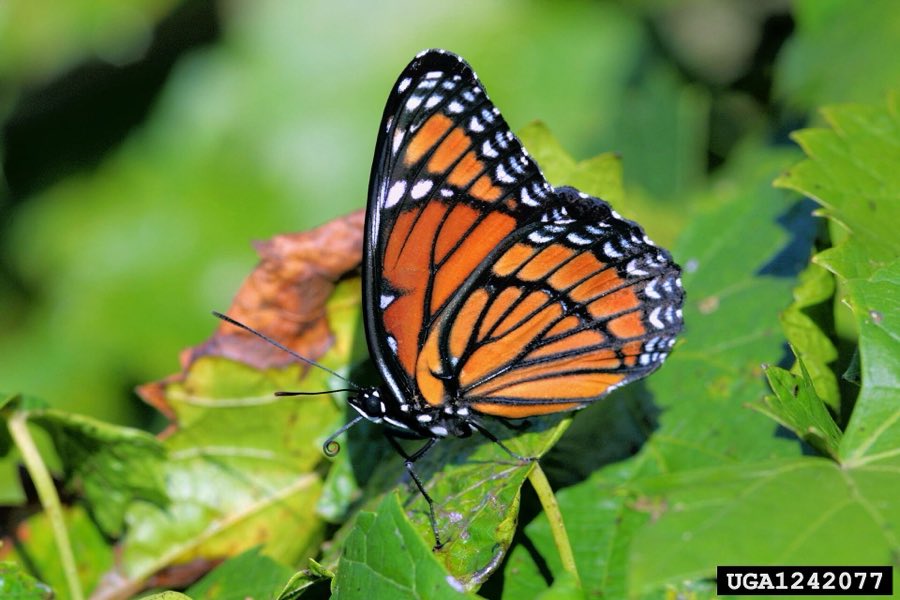
Three orange-and-black butterflies get called monarchs, and only one is. Learning the difference takes about a minute and is very satisfying.
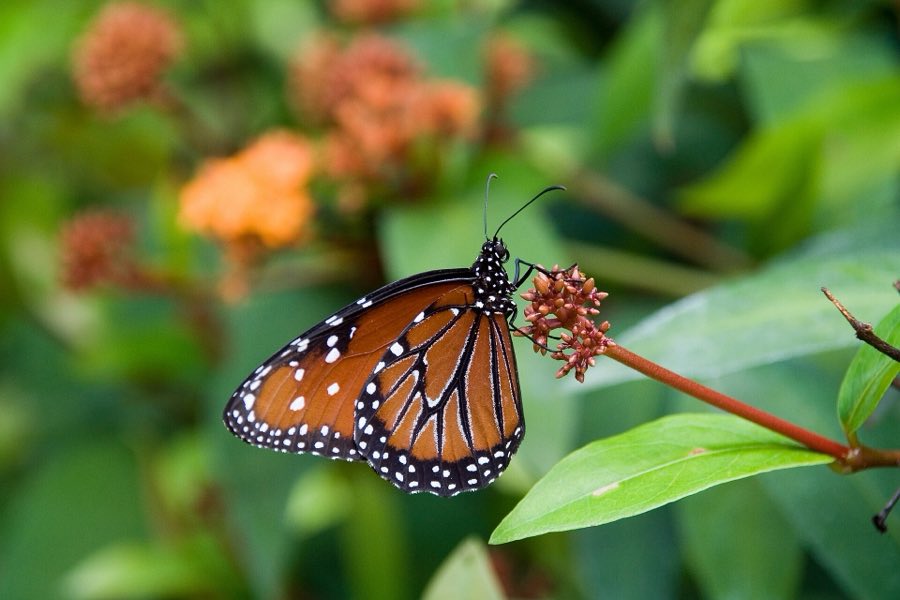
- Count the black lines. A viceroy has an extra black line curving across the back wing that a monarch does not have. That one line is the whole trick.
- Check the size. A viceroy is noticeably smaller, and it flies in a flappier, less gliding way.
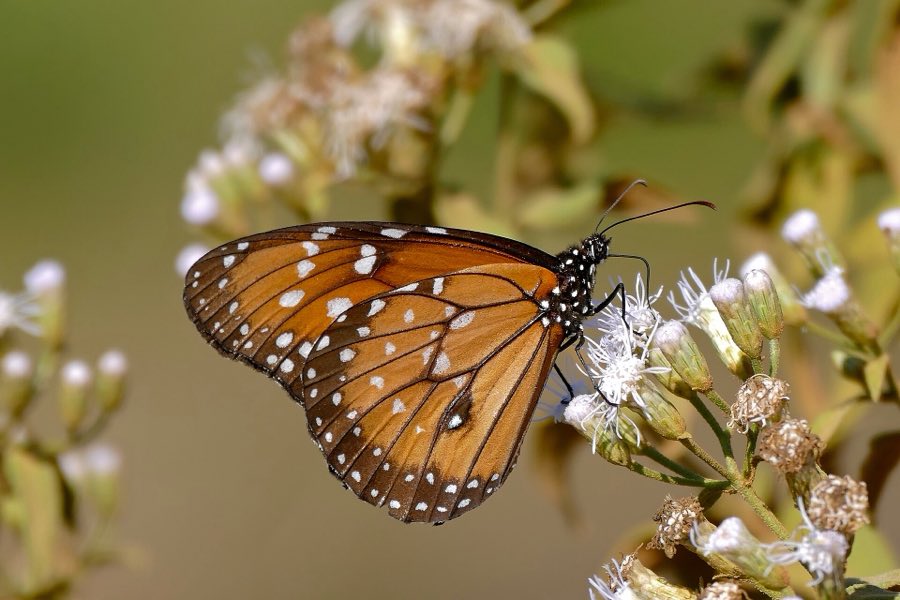
- Look for a plain brown one. That is probably a queen: same family, no heavy black veins on top, white spots scattered over the front wing.
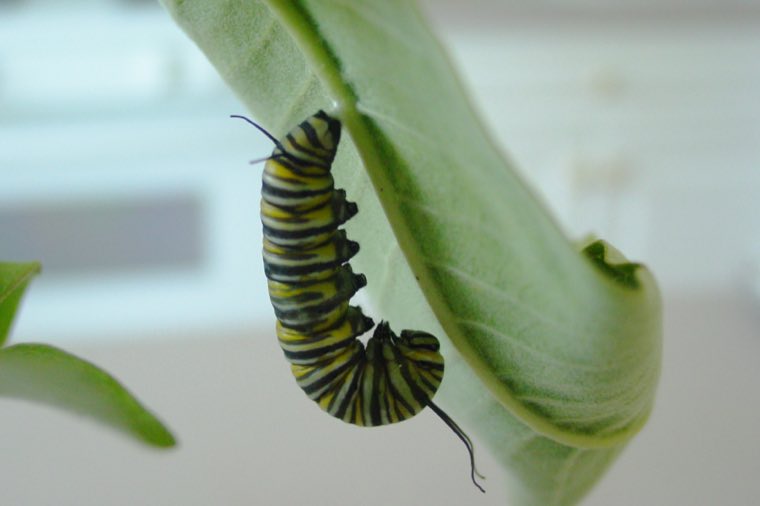
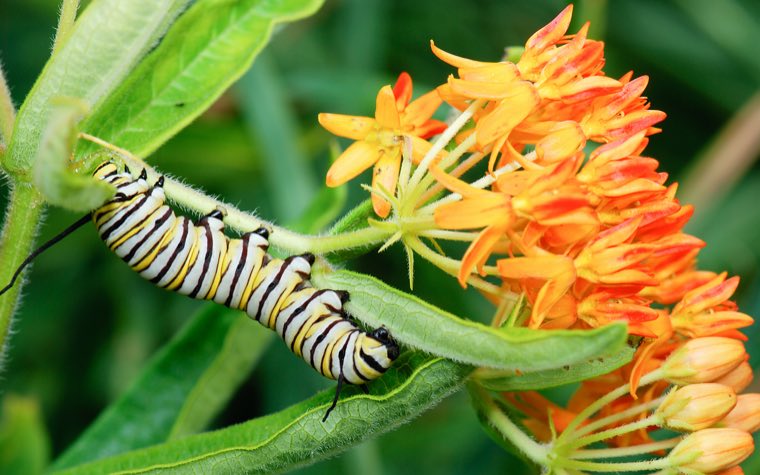
- Count the caterpillar’s tentacles. A monarch caterpillar has two pairs of black filaments, a queen caterpillar has three.
Then what? The viceroy is not simply copying. It turns out to taste unpleasant in its own right, from the willow leaves its caterpillars eat. Both butterflies are genuinely nasty, and both benefit from looking alike.
More things that look like something else →
Count something, and send it to a scientist
Time: Half an hour, once a week · You need: A milkweed patch you can get to.
Nobody can watch every milkweed in the country. Real monarch research depends on ordinary people counting what is in front of them, which means your numbers can end up in an actual study.
- Choose a patch of milkweed you can visit regularly. Ten plants is plenty.
- Each week, check the same plants. Count eggs, count caterpillars, and write down the date even when the answer is none. Zero is data.
- Look under the leaves. A monarch egg is a pale, ribbed dot smaller than a pinhead and is almost always on the underside.
- Send your counts to a monitoring project. Journey North and the Monarch Larva Monitoring Project both take records from anyone.
Then what? Weeks when you find nothing matter as much as the exciting ones. A record of absence is what lets anybody prove something changed.
What to look for each month →
Turn a patch of ground into a monarch stop
Time: A weekend, then years · You need: A sunny patch, milkweed, some late-flowering plants, and permission.
A migrating monarch needs two things: milkweed to lay eggs on, and flowers to drink from on the way. A surprisingly small patch is enough to be worth stopping at.
- Find out which milkweeds actually belong where you live. Planting the wrong one is worse than planting none.
- Put in at least ten stems in a group rather than scattering them about. A female monarch finds a clump far more easily than she finds one plant.
- Add flowers that bloom late. In September a migrating monarch needs fuel more than it needs a host plant, so goldenrod and asters matter enormously.
- Leave the dead stems standing over winter and cut them in spring. Birds take the fiber for nests and insects sleep inside the stems.
- Do not spray anything. Ever. Almost every spray that kills a greenfly also kills a caterpillar.
Then what? You can have a garden officially registered as a Monarch Waystation, and get a sign for it.
How to lay one out →